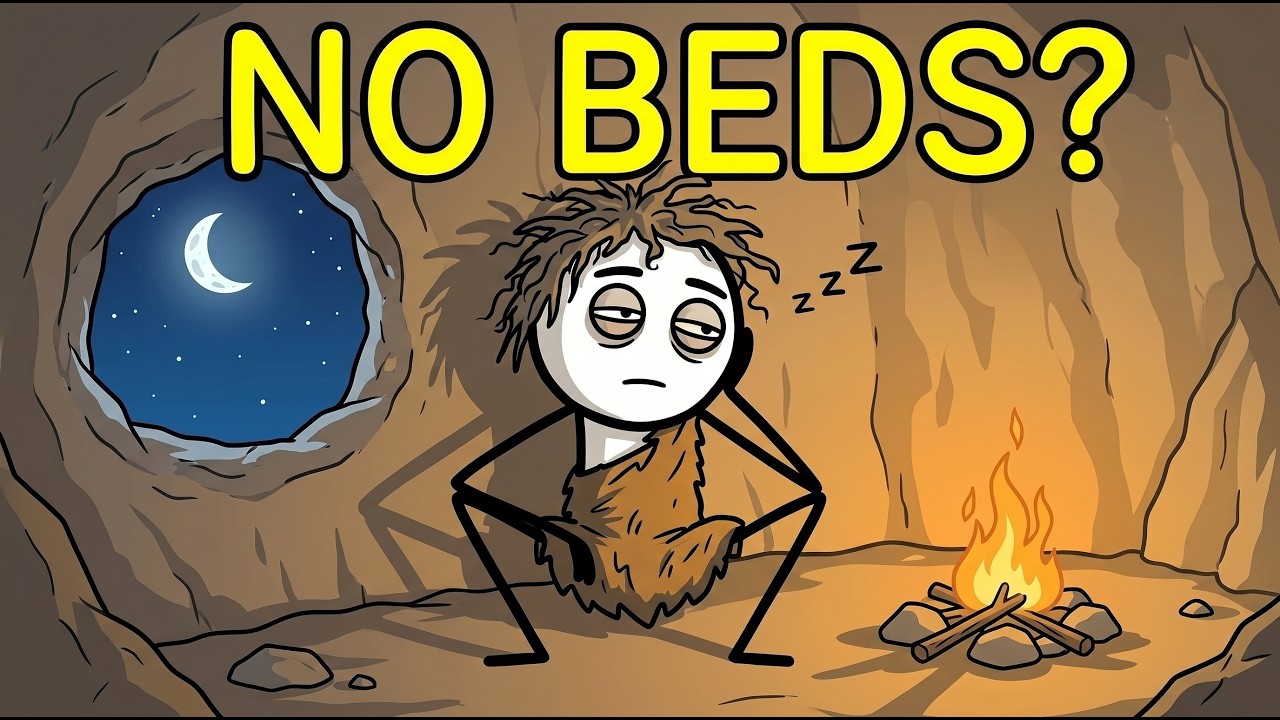
For most of human history, sleeping flat on one’s back was not the norm. Instead, people often slept propped up, reclined against pillows or bolsters, or even wedged into short beds that were too small for lying flat. Historical evidence from medieval European homes shows beds were short not because people were smaller but because they slept in a semi-upright position. This position was not just a quirk of a few centuries or cultures—it was widespread and persisted for centuries, especially in wealthy households where beds were designed specifically with elevated headrests and cushions.
There are several reasons why people historically chose to sleep sitting up. One practical reason is related to health: sleeping elevated helped with breathing and reduced the risk of fatal respiratory diseases common before modern medicine. Environmental factors also played a role, such as keeping off cold, damp floors and avoiding smoky areas near open hearths, since chimneys were a later invention. Social status and power further influenced sleeping positions; in European courts, reclining in a grand, pillow-stacked bed was a display of dignity and authority, while lying flat was associated with death or poverty.
Sleeping upright was not exclusive to Europe. Around the world, many cultures adopted similar semi-reclined positions for sleep, including enclosed box beds in rural France and wooden or stone headrests in ancient Egypt and parts of Africa and the Pacific. These varied sleeping arrangements often served multiple purposes: warmth, protection from drafts and animals, preserving hairstyles, cooling airflow, and maintaining alertness. Thus, the flat sprawl we assume as the universal sleeping posture is actually one of many cultural and historical possibilities.
Historical research also reveals that pre-industrial humans practiced segmented sleep—splitting their night into two distinct sleep periods with a calm wakeful interval in between. This pattern, lost with the advent of artificial lighting, was confirmed by scientific experiments showing that in conditions mimicking natural darkness, modern humans’ sleep cycles revert to this biphasic rhythm. Alongside sleeping position and timing, ancient humans prioritized safety due to constant night dangers, sleeping lightly, communally, and in positions that allowed rapid awakening to threats, unlike the deep, flat sleep common today.
Ultimately, the flat, uninterrupted eight-hour sleep in a secure, enclosed environment is a recent human development enabled by technological advances like strong locks, thick walls, and artificial light. For the vast majority of human existence, sleep was a watchful, upright, shared state dictated by survival needs. Modern sleeping habits may feel natural, but they represent a radical break from evolutionary history—made possible only by the invention that reshaped the very nature of darkness and safety in our lives.